Turning Climate Data into Comics and Visual Narratives
By Editor
RESCUE comics are showcased at the Visualising Climate 2026 conference.
Communicating complex climate data and concepts, such as overshoot and uncertainty, remains a challenge when engaging non-expert audiences. Effective visual communication approaches can bring complex data to life, not just presenting it, but also driving the story.
Comics have been one of the approaches used in RESCUE to reach a wider audience and make concepts behind the project's research more accessible and understandable. Two comics have been developed, one conveying the concept of temperature overshoot beyond 1.5°C, and a second comic deep diving into the complex world of uncertainty in climate modelling.
On 5 November 2026, the comics designed in RESCUE were showcased at a workshop held at the Visualising Climate 2026 conference, the first global conference on data visualisation for climate and environmental sciences. The conference brought together scientists, artists, communicators and journalists, exploring the intersection of science, data, art and storytelling.
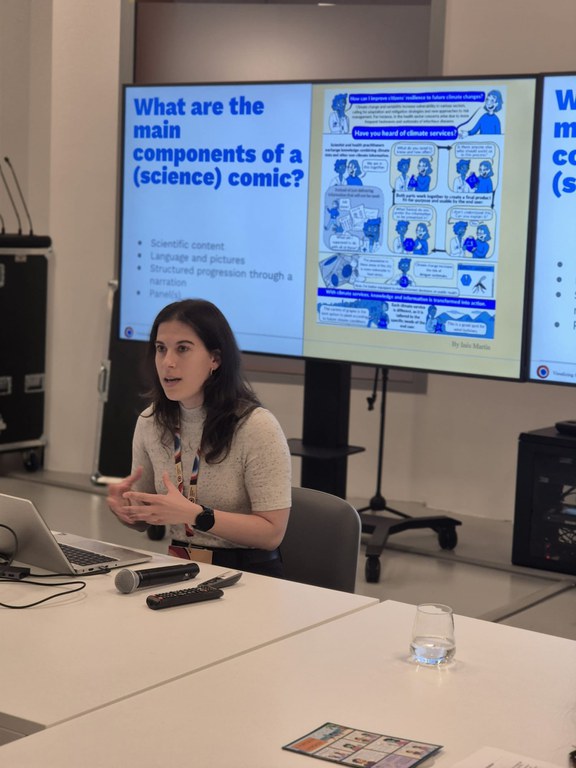
Ines Martin (BSC) presenting on science comics.
A workshop dedicated to comics and other visual communication formats was held by science communicators from the Barcelona Supercomputing Center, in collaboration with partners from CMCC and projects including Climateurope2. The workshop explored how data-driven storytelling formats like comics can help convey complex concepts and how the underlying data can be transformed into narrative elements.
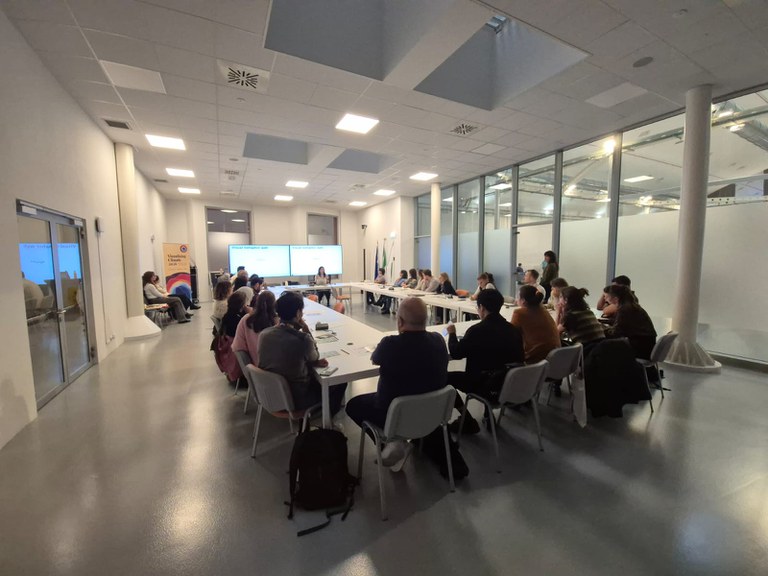
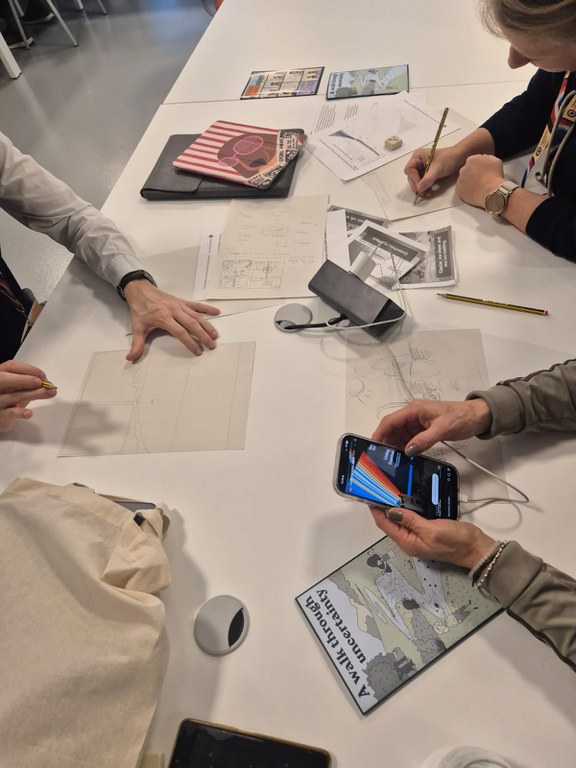
In a hand-on activity, the 40 participants of the workshop were given the opportunity to create their own comic based on provided climate data and concepts, experimenting on how to translating data into visual narratives that retain meaning while increasing accessibility.
Overall, the RESCUE comics and workshop received positive feedback and served as an inspiration for the participants.